Wednesday, July 17, 2013

Place Is Important

“Place is important. Place is important.” Dr. Robert Siudzinski starts off saying this, in a whisper of a voice. This caught the attention of our TTEC group gathered at the Highland Center in the White Mountains. Why is my place along the AT important? What will I pull from my students to show this with them?
“Soil is sexy.” Not only did this get our attention and a laugh, but a few side comments as well. Joe Homer took us out to look at some very sexy soil as he showed how to cut through the soil layering and examine it as a geologist. This relates to the Rocks and Minerals unit I teach in 4th grade. Is there a way to include this in my project curriculum?
“Leave No Trace.” I thought this simply meant, “Carry in, Carry out.” I was surprised that there are actually 7 parts to this program, and will definitely be teaching these to my students, as well as “Hike Safe”.
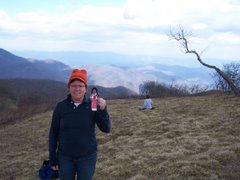
After 2 days of much inquiry-based instruction, I left on Saturday with lots of ideas, lots of question to be hopefully answered this summer, and the desire to go for a hike. My daughter, Colleen, and our dogs, hit the AT on Sunday hiking up to the Rattle River shelter off of route 2 in Shelburne NH. As we hiked along my mind was spinning with possible project ideas. But I knew most importantly that I had found my place, and after all, “place is important”!

Post by Patricia Weathers
Edward Fenn School
Gorham, NH

Thursday, July 11, 2013

I AM THE APPALACHIAN TRAIL

We have just launched our 2013 Video Contest and we want to know what makes you a part of the Appalachian Trail! The grand prize winner will have their video shown in theaters! 

Contest Overview
We are accepting video shorts, no longer than 3 minutes, which answer the question: How are you a part of the Appalachian Trail? 

Prizes
First Place 
  • Video screened at the 2014 ATC Membership Drive
  • Custom ATC hammock, courtesy of ENO™
  • Featured in A.T. Journeys (Official magazine of the A.T.)
  • Video featured on the ATC’s social media pages (Facebook, Youtube, Twitter, and Google+)
  • One-year ATC membership
Second Place 
  • ATC themed tote bag
  • Glow-in-the-dark water bottle
  • Featured in A.T. Journeys
  • One-year ATC membership
Third Place
  • ATC themed hat
  • Featured in A.T. Journeys
  • One-year ATC membership
Timeline
  • Video Submission: Monday, July 8, 2013 – Sunday, September 15, 2013.                   
  • Voting Period: Monday, September 16, 2013 – Friday, November 8, 2013
  • Winners announced: Monday, November 11, 2013
Submission
To submit your video, visit www.facebook.com/ATHike and locate the “Video Contest” tab. You’ll find it just under our cover photo near “Photos” and “Events.”
 
To learn more, visit www.appalachiantrail.org/2013VideoContest. We look forward to receiving your video submissions!
 
Happy filming!
The Appalachian Trail Conservancy Team

Tuesday, June 25, 2013

TTEC Alumni Input Needed!

If you are a Trail To Every Classroom Alumni, we need your help!

It would be such a gift to the programming staff at ATC and NPS if you could take a SHORT (6 questions! That's it!) survey letting us know how your year was.  We cannot describe the impact of this program to funders and leaders without knowing what you're doing!

Please take a few short minutes to fill it out here: http://www.surveymonkey.com/s/TTEC2012-13questions

Thanks for your ongoing support to the Appalachian National Scenic Trail and for all you do in educating our youth!

Tuesday, June 18, 2013

An Applayground Trail

Post by Janet Caley

Elementary students at Conestoga Christian School in Morgantown, PA  enjoyed learning and "walking" the trail for an all elementary school project. The Trail was introduced originally by some staff from the school that had hiked a section of it the previous summer. During several months for two years, the students and staff would walk around a designated course on the playground. Each time they completed a lap they received a Popsicle stick which represented 1/6 of a mile. These sticks were then added up for total miles on the trail that day averaging about 60-70 miles a time. As students progressed on the trail the progress was marked on a huge trail map as well as a number graph.  Real pictures of the trail were included on the bulletin board.  Video clips of the trail were also used along the way to allow students to see the real trail. Although we did not complete the trail after two years, we did end up walking about 1,480 miles which took us into Connecticut being a NOBO!  We also ate ice-cream when we reached the half-way mark at Pine Grove Furnace, and got mementos of some of the different states we passed through.


Announcements were made over the loudspeaker with our progress and parents were invited to join the Friday morning or afternoon walks. The final "treat" was everyone receiving a map of the trail with a challenge to get out there during the summer and get on the real Appalachian Trail!  We thought it was a great way to promote life-long fitness and to educate students and families about the Trail along with working together as a team. 

Monday, June 17, 2013

Growing Connections

Post by Kristy Duris, Profile School in Bethlehem, NH

 During the past few years, my interest in the A.T. has grown and been slowly developing. I began hiking with a colleague (and now extremely close friend) within the White Mountains a couple times a week. Then I hiked all of the 48 four thousand foot mountains in NH. And then I kept hiking, getting out the the trails as much as I could, whether it be in the spring, summer, fall, or winter. Throughout this progression, my friend always pointed out when we were on the A.T. when out hiking. I knew of the A.T., but up until my passion for hiking was revealed, I never really thought about it other than when I was serving thru-hikers when working in Lincoln restaurants!
Now, my mind only has more questions as I am exposed to the history, creation, culture, etc. of the Trail. I want to learn more for my own personal knowledge as well as to use in the classroom. From the first session and meeting other people in the program, it seems that other teachers are in a similar place. This wanting of knowledge about the A.T. has definitely connected all of us and through our sharing, we have already had fun learning about soil, Mount Washington weather trends, and previous participants’ successes. The first weekend was inspiring and motivating, and only increased my curiosity about how I can use this program for teaching.
I am in a transition in my teaching, using more experiential education in my classroom. This past year I co-taught a class called Project Venture for eighth grade. During this pilot year, the students were exposed to service learning (building bridges and trail maintenance for town trails, creating a “pump” track for the community) and the natural world (hiking, having class outside when possible) on a regular basis. I still can’t believe how successful it was and how students were excited, motivated and willing to work. My hopes are to build on this program, utilizing the A.T. regularly as both a service learning opportunity as well as a natural world experience. I am also looking forward to including a few “dirty” lessons on soil and incorporating the Leave No Trace principles out on the trail!

Wednesday, June 12, 2013

Troutville Trail Days


Post by Rebecca Kyle of James River High School Buchanan, Virginia 
Leaf No Trace Craft Time

Principle #6
The Troutville Trail Days celebration came at the perfect time this year.  There was a little bit of apprehension because of the weather forecast, but the rain stayed away and it turned out to be a beautiful day.  Following a long week of testing students were able to learn about the history and importance of the Appalachian Trail in the days leading up to the community festivities.  In groups of two or three students created posters depicting the 7 principles of Leave No Trace.   Their creative works were displayed at the Troutville town park during the trail days events and students volunteered to help teach the principles they learned to younger children.  We encouraged participants to create their very own “Leaf” no Trace signs with images of leaf prints.  Another great addition to the trail days were the t-shirts.  Middle and high school students competed to enter the best design.  First, second, and third place winners all came from James River High School! 


Friday, June 7, 2013

Invasive Species Awareness Day in Franklin, NC


Post by Mary Bennett

On April 3, 2013, the Land Trust for the Little Tennessee River and the Friends of the Franklin Greenway co-sponsored the Invasive Species Awareness Day along the Greenway Walking Path beside the Little Tennessee River.  Duke Energy provided financial support and Franklin AT Ambassador, Mary Bennett, was contacted as event coordinator. 
Approximately 250 students in grades 5-12,  from 4 educational institutions (Oconaluftee Job Corps, Macon Early College, Franklin High School and Mountain View Intermediate School ) participated in outdoor Invasive Species Awareness Day spring event. 
Invasive Species Awareness Day water quality presentation from WATR – Watershed Association of the Tuckaseegee River.

Interactive Educational Presentation Stations hosted by ten professional conservation organizations, private contractors, from local nonprofits to state and federal government agencies engaged student groups on a wealth of aspects surrounding the of issues invasive species.  Small groups of students (about 8-12 per group) rotated through a series of hands- on learning stations addressing the concerns of invasive species, including plants and animals, identification, history, and management solutions.  Pre-activity information, instructional materials and web links on “Invasives” were provided to teachers in advance of event day.
US Fish & Wildlife rep illustrates clam life cycles to elementary school students
 Each station, presented a topic unique aspect of invasive species ranging from plants, plant pathogens, insects, clams, fish, mammals, soil erosion, water quality, animal adaptations, feral cats and dogs skulls, etc.  Presenters utilized visual aids, natural artifacts, question and answer, guessing activities and scientific observation and analysis to engage students in understanding.

Students study the plant stems of native and non native plants along the Little Tennessee River.

Two additional instructional methods were included during the day: Service Learning and Cross Age Tutoring.  The high school students in Agricultural Education and the Job Corps trainees gained valuable skill development by assisting in the removal of Kudzu near the edge of the Greenway.  Students learned about the tools required for the specific job and cleared the area and followed up with erosion control grass seeding and straw coverage.  These young adults provided a community service to the local community.

The Early College students developed valuable leadership skills by conducting multiple engaging and highly interactive activities for the younger school students.  The students created hands-on learning lessons that allowed every child attending a chance to test knowledge of native versus nonnative species, build a water filter, identify a watershed, a food web and examine bones, branches and shells.  The interaction of teenagers with “tween agers” enriched the experiential learning process.

North Carolina NCCAT participants

North Carolina NCCAT participants
At the Wayah Bald Fire Tower

Mary Jane

Mary Jane
On top of Silers Bald